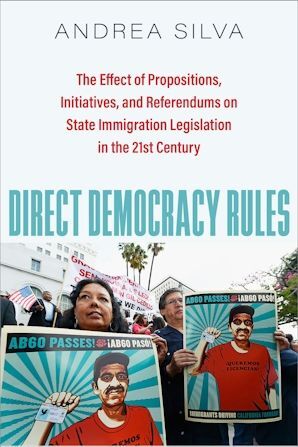
Since 2010, state legislatures have enacted 1,644 statutes and resolutions regarding immigration, averaging about 329 laws each year. Nevertheless, the most controversial bills, the ones we remember and talk about, usually have some involvement with the direct democracy process: initiatives, propositions, and referendums designed by everyday citizens with little to no inside knowledge of politics. From drivers licenses and in-state tuition, to English-only education and access to social services, citizens are fundamentally shaping state immigration policy.
In Direct Democracy Rules, Andrea Silva reveals how the frontlines of U.S. immigration policy have shifted from Congress to the states. While federal authority over immigration is well established, decades of legislative stalemate have created a vacuum that states, and citizens themselves, have rushed to fill. At the heart of Silvas analysis is the powerful role of direct democracy mechanisms in allowing activists, advocacy groups, and political strategists to bypass legislatures entirely, advancing sweeping policies without compromise. In this system, a single vote at the state level can reshape the lives of millions and influence the national conversation on immigration.