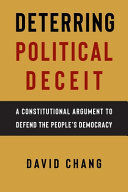
Offers a new First Amendment framework that permits deterring political deceit, while minimizing the chill of honest discourse, by targeting fraudulent intent, not false content
More than ever, influencers and politicians communicate political messages that they do not believe to be true. This political deceit is constitutionally valueless, harms public discourse, and impedes effective public decision-making. Yet, under current doctrine, the Supreme Court would invalidate any regulation of deceitful political advocacy as an abridgement of political speech.
In Deterring Political Deceit, David Chang explores why traditional efforts to target falsity in political speech have been rooted in constitutional error. While the Court has determined that the defamation of public officials is unprotected, it wrongly declared that false statements of fact lack constitutional value, and overlooked the contradiction between deceitful communicative intent and free speech values. Both errors together have prevented reformers from identifying the political fraudsters who should be deterred by law, and recognizing the politically sincere who should be protected and respected, even when wrong.