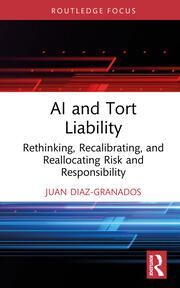
This book provides a novel framework for adapting tort law to the challenges of artificial intelligence (AI) in all of its formsfrom machine learning to generative models to autonomous and agentic systems.
Centered on a liability matrix, this book maps AI systems into four zones according to their private and public risks and benefits, and it prescribes tailored liability mechanisms for each. These range from flexible, fault-based models with safe harbors for low-risk, high-benefit technologies, to strict liability, rebuttable presumptions of causation and even moratoriums for systems that pose grave public dangers without delivering corresponding public value. Combining rigorous doctrinal analysis with practical policy tools, the book addresses complex issues such as fault attribution, causation, compensable harm, evidentiary burdens and distributed responsibility.