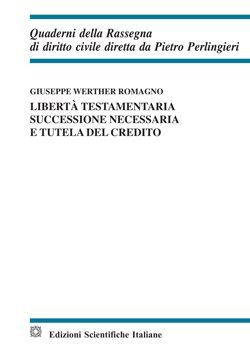
Sovente il regolamento testamentario reca preclusioni al pieno conseguimento da parte del legittimario dei diritti al medesimo riservati dalla legge, con conseguente svilimento delle aspettative di altri soggetti, come i creditori del successore necessario, i quali ravvisano nella vicenda successoria un'occasione di incremento del patrimonio del loro debitore. Di fronte al comportamento inerte o acquiescente di quest'ultimo, si riscontra in dottrina e in giurisprudenza la tendenza a reperire comunque nel sistema giuridico un'adeguata forma di tutela per le ragioni creditorie, con correlativo sacrificio dell'assetto successorio delineato dal testatore. In realtà, tale atteggiamento non tiene in adeguata considerazione la rilevanza apicale della libertà testamentaria nella gerarchia assiologica dell'ordinamento giuridico, siccome espressione di valori dotati di una capacità performante, suscettibile di dispiegare i suoi effetti nei confronti di qualsiasi manifestazione dell'azione umana, a principiare dai rapporti economici.
Often the testamentary regulation prevents the legitimate heir from enjoying all the rights reserved to them by law, which adversely affects the expectations of other subjects, such as creditors of the successor, which would otherwise have seen an increase in the assets of their debtor. In response to the inactiveness or acquiescent conduct of the latter, there has been a tendency in doctrine and jurisprudence to identify from within the legal system an adequate form of protection for credit claims, which has a knock-on negative impact on the testator's state. In actual fact, that approach does not take adequate account of the key importance of testamentary freedom in the intrinsic hierarchy of the legal system, as it is an expression of values endowed with a performing capacity, capable of enforcing its effects in relation to any expression of human action, starting with economic relations.